DRINKING WATER TREATMENT
Tap water sometimes gets contaminated with germs and chemicals at high enough levels to make you sick. Learn how public water and private wells get contaminated and how to find out if your water has unsafe levels of germs or chemicals.
The Bureau of Indian standards (BIS) gives drinking water standards and CPCB regulates discharge of waste water. However, sometimes unsafe levels of harmful germs and chemicals contaminate public drinking water. The germs and chemicals can get in the water at its source (for example, ground water or water from lakes or rivers) or while water is traveling through the distribution system, after the water treatment plant has already removed germs and chemicals from source water.
Certain populations, such as vulnerable individuals (including those who are pregnant, older adults, and those with weakened immune systems like people living with HIV, undergoing chemotherapy, or taking transplant medications), are more susceptible to illnesses caused by germs and chemicals in water. Contamination of drinking water can occur at the source or within the distribution system after treatment. Various sources contribute to this contamination, including fertilizers, pesticides, and other chemicals applied to land near water sources; large industrial animal farms; manufacturing operations; sewer overflows; stormwater; wildlife; and naturally occurring chemicals and minerals in rocks and soil, such as arsenic, radon, and uranium. Additionally, cracks in water pipes or other distribution system issues can lead to contamination.
SEGMENTS
-
 Domestic
Efficient and compact water purifiers for households, ensuring effective purification of tap water with desired minerals.
-
Community
Customised purifiers for communities are designed with indigenously developed technology, it makes sures that every drop of water is purified and offers quality and healthy drinking water to each individuals.
-
Defence
Robust and reliable purifiers designed for special forces to ensure that every soldier should get quality and healthy drinking water at any location. These are portable purifiers, can moved with the regiments.
-
Institutions
High-standard water purifiers for educational and healthcare institutions, ensuring safe, hygiene, and healthy drinking water for everyone.
-
Heavy Metal Contamination
Advanced treatment processes to effectively remove heavy metals from water, ensuring compliance with environmental standards and protecting public health. It can also remove other anionic contaminants from water like Chromium, Arsenic, Dyes, Fluorides, etc.
KEY FEATURES
Our innovative water purification system ensures zero water wastage, operates without electricity, and requires minimal maintenance. It effectively removes all types of water contaminants, producing safe and healthy mineral water for consumption.
- Not a single drop of water is wasted
- No electricity required
- No critical maintenance
- It can remove all types of water contaminations
- Produces safe & healthy mineral water
PROCESSES
The water purification system is designed to provide safe drinking water by removing various contaminants from ground/surface water. The technology ensures that…
 Removal of bacteria to the extent of > 99.99% (4
log scale), eliminating microorganisms, color, odor, suspended solids, and
organics.
Removal of bacteria to the extent of > 99.99% (4
log scale), eliminating microorganisms, color, odor, suspended solids, and
organics.
 The
system ensures no dead bacteria in the product water.
The
system ensures no dead bacteria in the product water.
 No
electricity or chemicals required.
No
electricity or chemicals required.
 Can
treat up to 40 liters of pure water per day at a pressure head of about 5 psig.
Can
treat up to 40 liters of pure water per day at a pressure head of about 5 psig.
 Capacity is 1000 liters per hour.
 Removal of anionic contaminants such as fluoride, chromium, arsenic, dyes, etc.
 Pressure head range is from 5 to 35 psig.
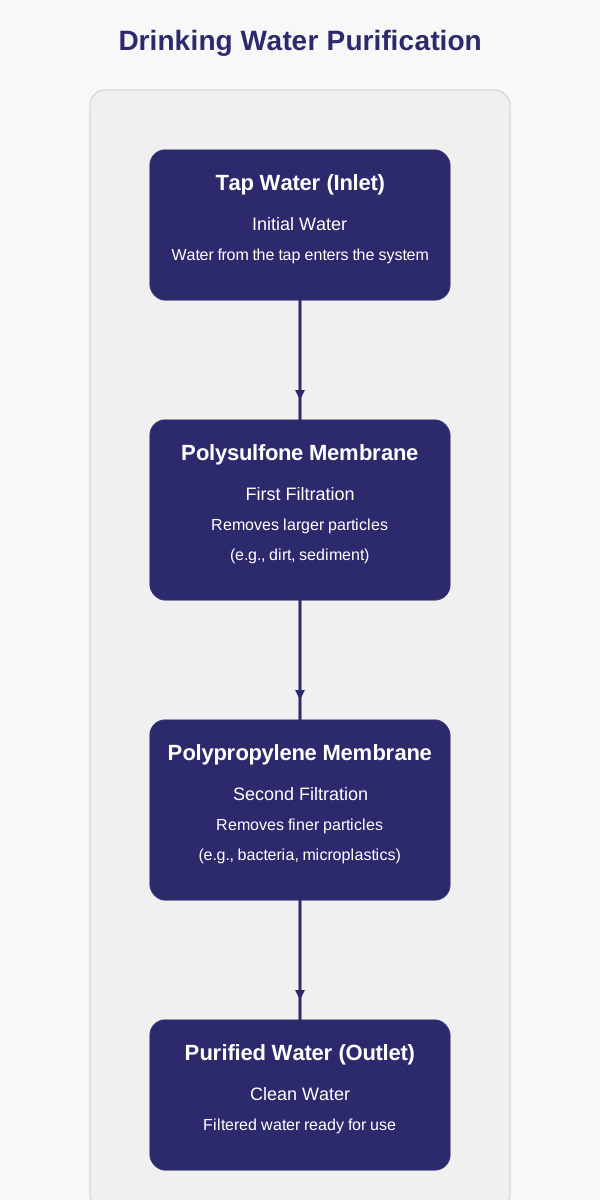
Drinking water purification begins with tap water entering the system. The first filtration stage uses a polysulfone membrane to remove larger particles such as dirt and sediment. This initial filtration step is crucial for eliminating visible contaminants that may affect the water's clarity and taste. By removing these larger particles, the polysulfone membrane sets the stage for more effective subsequent filtration.
In the second filtration stage, the water passes through a polypropylene candle. This membrane targets finer particles, including bacteria and microplastics, ensuring the water is free from harmful microorganisms and minute contaminants. The combination of these two filtration stages results in purified water that is safe and clean, ready for consumption. This dual-membrane approach ensures comprehensive purification, addressing both larger and finer impurities in the water.